 EZ Process Pro

"Too Big to Fail." That's What They Thought.
A few weeks ago, a piece ran in Furniture Today that I haven't been able to stop thinking about. The author was watching the same bankruptcies I've been watching: Conn's, At Home, American Signature, Sleep Number. He landed on an interesting conclusion: size stopped being an advantage. The ocean liner got too heavy to turn.
Allegrezza is right. And there's a layer underneath the debt and the square footage that's worth looking at closely.
I've Seen This Before. Up Close.
Early in our company's history, Jill and I flew out to High Point, North Carolina to meet with one of the biggest furniture retailers in the country. They were on Furniture Today's Top 100 list. They had a 136,000 square foot showroom right in downtown High Point. They had a C-suite. They had decades of history behind them.

I walked in with my hair past my shoulders. Jill and I weren't married yet. We looked like two kids who had no business being in that room.
They showed us everything. Their full operation. Their pain points. Their goals. And we had an answer for every single one. We could have given that company a technology advantage that none of their competitors had. The solution was something we had already built.
We told them our price for a company their size: $10,000 to get started and $250 a month.
They called us back two days later and said there was no way a software company charging that little could solve their problem.
Within 365 days of that meeting, they were out of business.
I don't remember the exact words from that phone call. But I remember the feeling in that room when we met. It was a cigar smoke and dark wood kind of feeling. A company founded in 1939 that thought it couldn't lose. They never took the time to look under the hood. Never made the effort to take a test drive. The price was too low, so they moved on.
They thought they were too big to fail.
They thought they didn't have to change with the times.
And I knew, holding that phone, that somebody was going to come along and make them irrelevant. I just didn't know it would happen that fast.
Now Look at Sleep Number
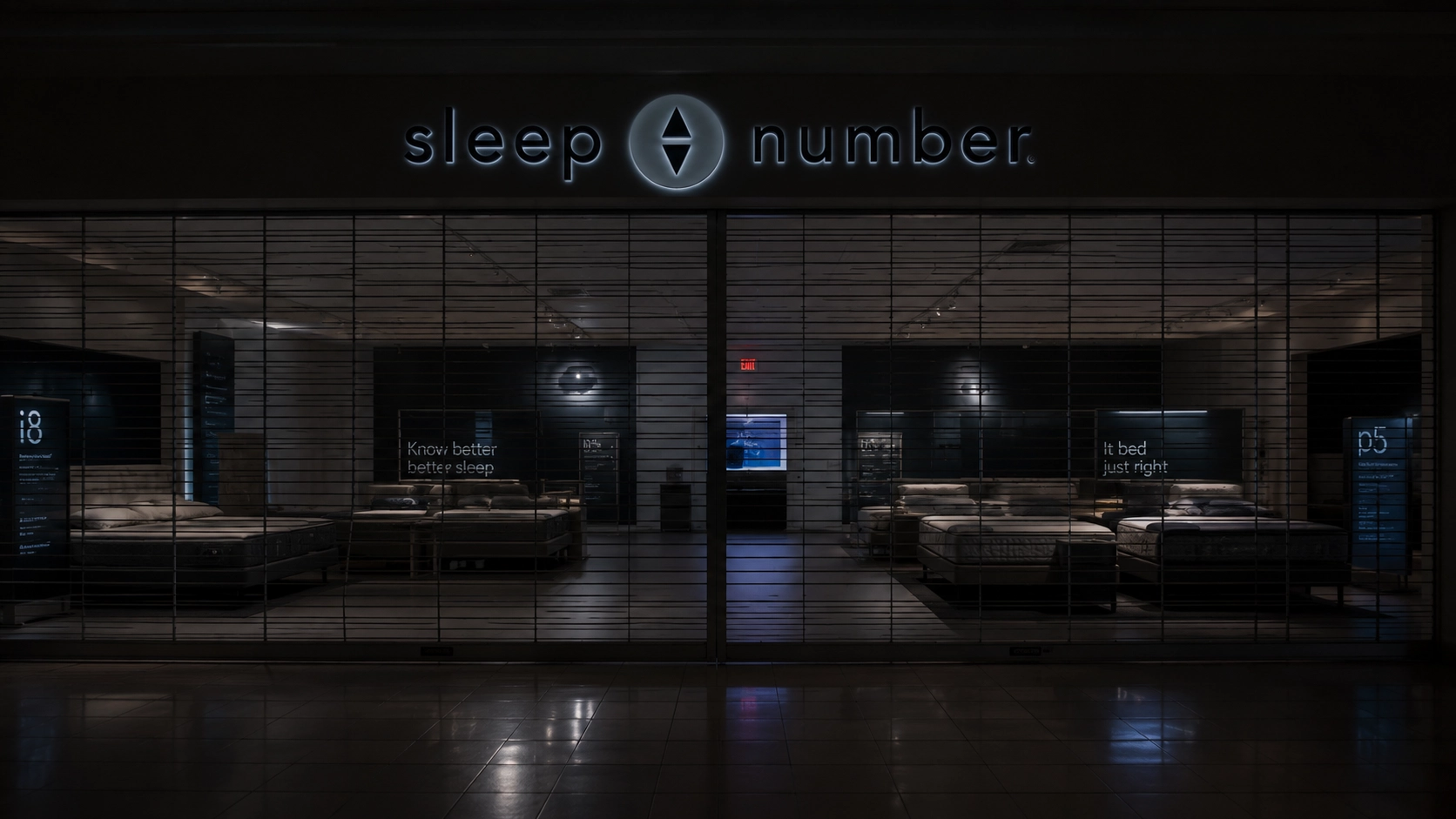
Sleep Number hit $2.18 billion in annual sales in 2021 during the pandemic boom. The kind of number that makes a company feel bulletproof. Despite a major new marketing campaign, a brand reset, and extensive product innovation, first quarter sales fell 19% to $319 million. They filed for Chapter 11 on June 12, 2026, and entered an agreement to sell substantially all of their assets for $415 million.
The sales came back down. And what was underneath wasn't strong enough to hold.
Here's the Part That Matters for Your Store
You might be reading this thinking: I'm not Sleep Number. I don't have 572 stores. This doesn't apply to me.

It applies to every furniture retailer who has been in business long enough to get comfortable.
I know what a Tuesday looks like inside a store where revenue is covering the problems. The owner is busy all day without moving a single needle. The corporate card is picking up dinners. The company is paying for the new car, the family vacation, the boat. Every expense finds a business justification. And why not? The checks are clearing. The vendors buy them dinner in High Point and Vegas. The bank account looks fine.
They think that's a successful business. It may feel like a successful business but it's not a protected one. Every dollar that should be building infrastructure for the next hard season is walking out the door instead.
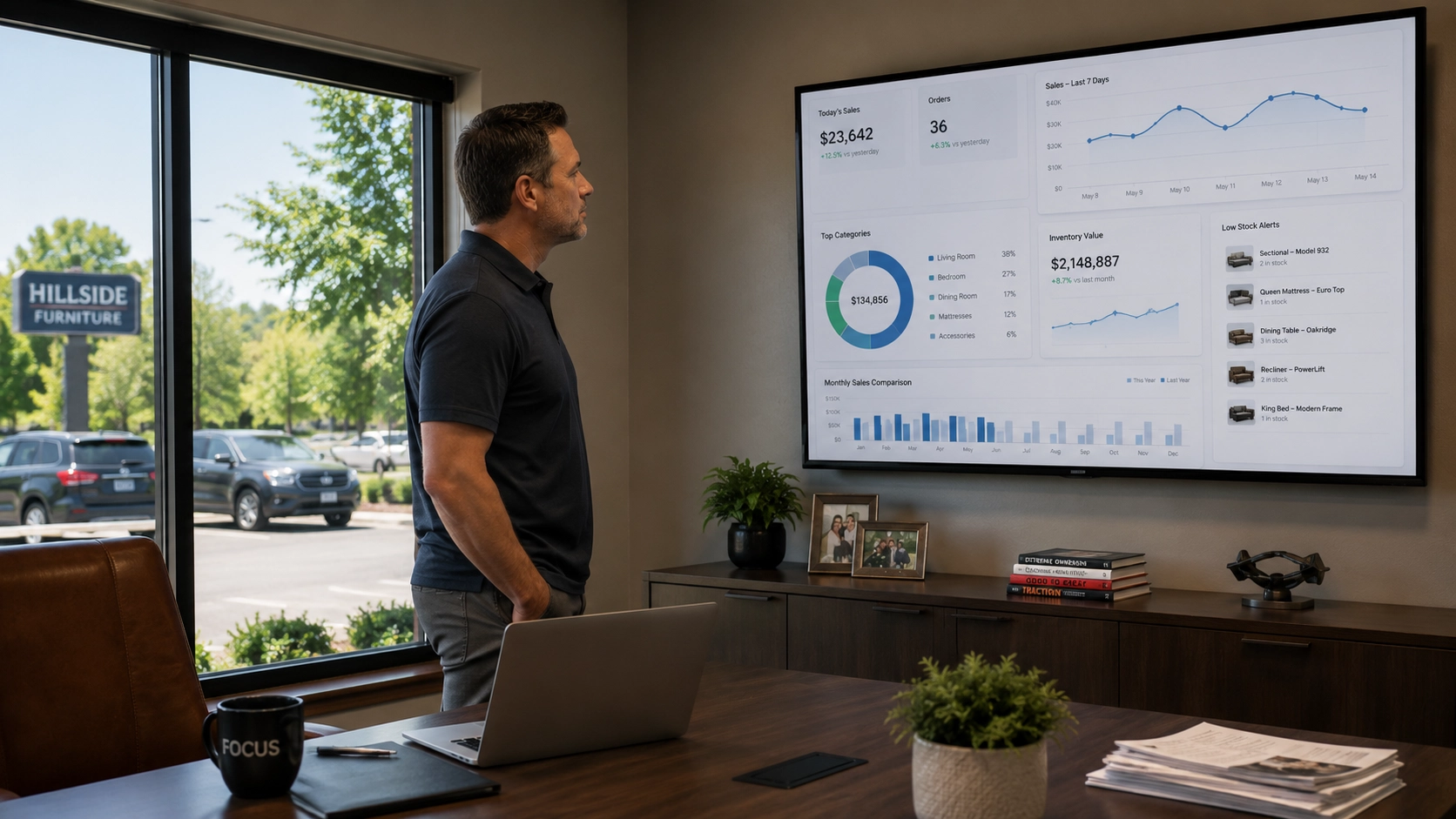
The owner who has real systems in place isn't filling the day with tasks that feel productive but move nothing forward. The processes are running. The team knows what to do. The numbers are visible without anyone having to dig for them. Their data aligns perfectly because they are not on a bunch of tools duct taped together. That owner isn't working less because they stopped caring. They're working less because they already built a solid foundation and processes that don't fall apart when they step away.
The difference between those two owners isn't talent. It's not even effort. It's whether the profit was reinvested into the business or spent on the perks of feeling successful.
Revenue can hide problems for a long time. A strong sales year covers disconnected systems. A busy floor covers the fact that nobody actually knows what's in the warehouse. A growing bank account covers the reality that nobody has actually tested what this business looks like when the sales slow down.
Then the market shifts. Rates go up. A competitor opens nearby. A slow quarter hits harder than expected. And suddenly there is no margin left to cover what was always there.
The speed bump didn't create the problems. It just made them visible.
The companies going bankrupt right now didn't fail because they got too big. They failed because the good times blinded them into believing the good times would always come. Because "good enough" became a company policy. Because the tools and systems running their business in 1995 were still running it in 2025, held together with workarounds and the sheer force of the people who'd been there the longest.
That's not just a $500 million company problem. Independent retailers doing $3 million a year fall into the exact same trap. The numbers are smaller. The pattern is identical.
The Independents Who Are Winning
The independents who are winning right now are winning for a reason. The Furniture Today piece makes this point well. Regional independents who aren't buried in debt and own their own buildings are holding up. What it doesn't explore is what the winning independents are actually doing differently.
It's not just the balance sheet. It's that they built on infrastructure that moves with them. One system. One version of the truth. The ability to see what's happening without being in the building. They track their profit and reinvest it back into the business, creating a moat for protection against a potential downturn. The owner spending profit to feel successful? That moat has been draining for years without them prioritizing it.
The ocean liner analogy is right. But it's incomplete. The reason some ships turn and some don't isn't just size. It's what's running in the engine room.

If your engine room is five tools that don't talk to each other, a process that lives in your head, and a Tuesday that looks more like controlled chaos than intentional growth, you are one bad quarter away from finding out how thin the ice actually is.
The best time to fix your foundation was ten years ago. The second best time is today.

About the Author
Alan Lucien is the co-founder of EZ Process Pro, a cloud based ERP platform built specifically for independent furniture and mattress retailers. Before launching the software in 2001, Alan and his wife Jill spent years running the operations and warehouse of a family owned furniture store, buying and implementing every retail software solution they could find before deciding to build their own. Twenty five years later, EZ Process Pro serves retailers across the country, from single location independents to chains that have grown to hundreds of stores. Alan writes about furniture retail operations, technology, and the systems that separate stores that scale from stores that stall. Learn more at ezprocesspro.com.
Sources
Ray Allegrezza, "Too Big to Fail? Not Anymore," Furniture Today
Sleep Number revenue and bankruptcy figures: Inc. Magazine and U.S. Bankruptcy Court filings, June 2026