 EZ Process Pro

What Is Retail Furniture Software (And Why Most Stores Are Using the Wrong Kind)
A few months ago, Jill and I walked into a mattress chain with over a hundred locations nationwide. We weren't there on business. We just needed a pillow.
The salesperson was great. Knew the product cold, walked us through the differences between models, and sold us on exactly what we wanted. He checked his inventory system. "Yep, we've got it in the back." So Jill and I started moseying around the store while the warehouse guy went to grab it.
Fifteen minutes later he came back empty-handed. "Sorry, the system said we had it, but it's not there."
Jill pointed to another pillow she liked. "Do you have that one?"
System said no. Warehouse guy said, "I think we might actually have that one, let me check." Another ten minutes. Turns out they did have it. We bought it and left.

Here's the thing. That wasn't a people problem. The salesperson was excellent. The warehouse guy was trying his best. That was a software problem. And it's the same problem I've watched play out in furniture and mattress stores for over twenty five years.
If you're actively shopping for retail furniture software right now, this post is for you. Because there's a real difference between software that was built for this industry and software that was built for something else and adapted to fit. That difference shows up every single day on your showroom floor.
What Retail Furniture Software Actually Has to Do
Most retailers who come to us fall into one of three camps. Some are on cheap generic tools like Shopify or a basic POS cobbled together with QuickBooks and spreadsheets. Some are paying a fortune for enterprise platforms like SAP or Microsoft Dynamics that were built for massive corporations and have never heard of a special order or a layaway. And some are on software marketed specifically to furniture retailers that still isn't doing the job — because being built for the industry and being built well for the industry are two different things.
What all three have in common is this: they weren't built around the specific realities of how furniture and mattresses are actually sold. And that gap shows up fast.
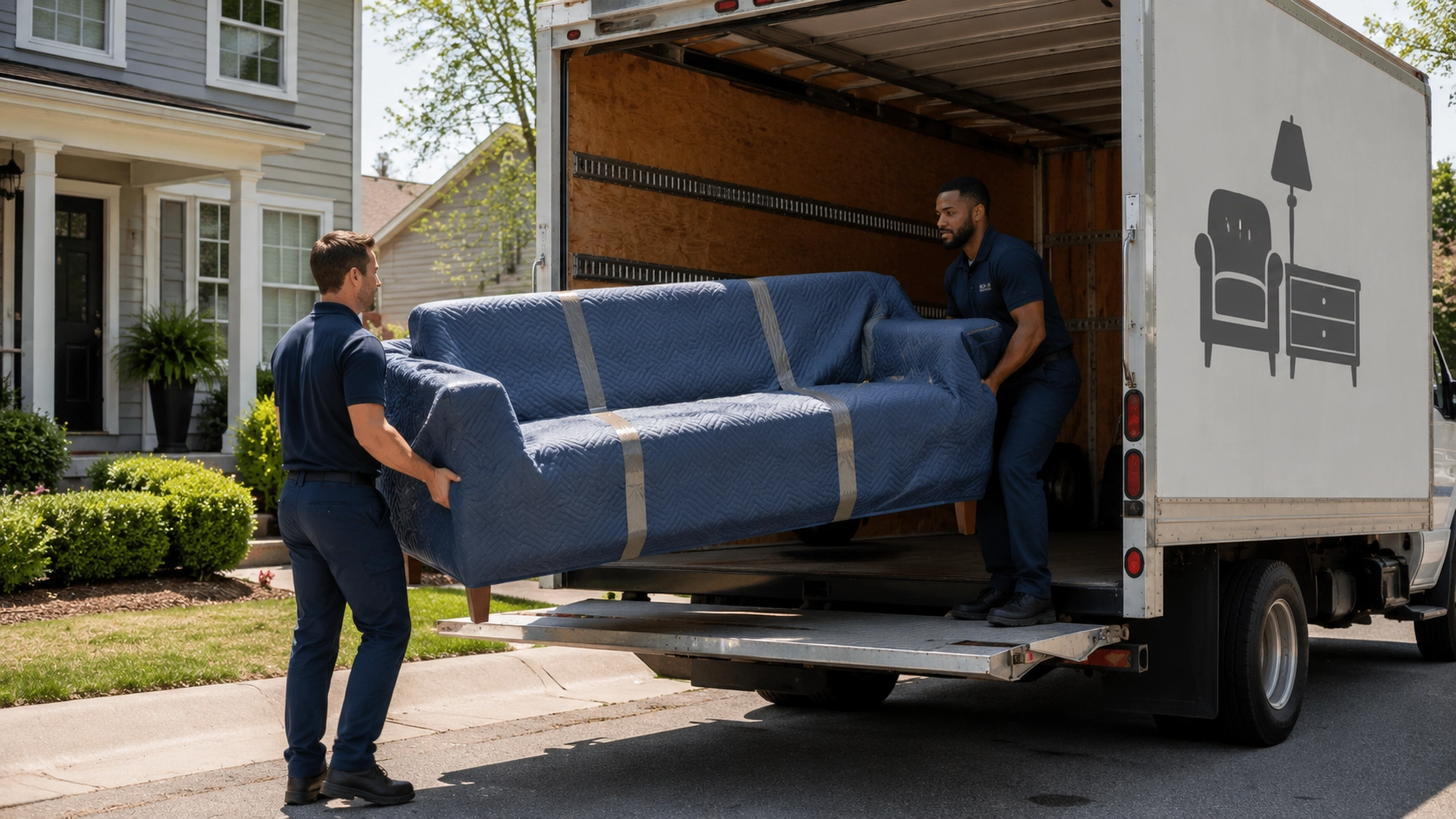
Here's the thing most generic software developers never think about: a sofa won't fit in a Ford Explorer. A mattress won't fit in a Honda Civic. Which means almost every transaction you make involves someone buying something today that they're going to receive sometime in the future. There's a delivery truck, a delivery window, a warehouse crew, freight costs, setup fees, and in a lot of cases, a special order placed specifically for that customer's needs.
That is not the same as selling a pair of shoes online. Not even close.
Purpose-built retail furniture software has to handle all of that out of the box. Special orders tied to specific customers. Vendor lead times. Delivery scheduling. Layaway tracking. In-house financing. Commission calculations that reflect how furniture sales actually work. An ecommerce website that shows accurate availability in real time. Price tags that match what's in the system. And an accounting module that doesn't require you to manually reconcile three different tools at the end of every month.
When a software company tells you their platform works for furniture retail, the first question to ask is whether they built it for furniture retail or whether they're hoping you'll figure out the workarounds.
The Inventory Status Problem Nobody Talks About
This is where most stores bleed, and most software falls completely short.
Generic retail software treats inventory as binary. Either you have something or you don't. It's in stock or it's out of stock. The box is in the warehouse or it isn't.
But in a real furniture or mattress store, that's not how inventory works at all. An item can be physically in your warehouse and still not be available for sale. Here's what I mean. At any given moment, a single piece of furniture in your store could be in one of several completely different states:
Available and ready to sell. Locked on the showroom floor as a display piece. Reserved for a specific customer who already paid a deposit. On order from the vendor but not yet received. Damaged and waiting for a claim or repair. Part of a stock purchase order that hasn't arrived. Discontinued, meaning you can sell the one you have but can never reorder it.
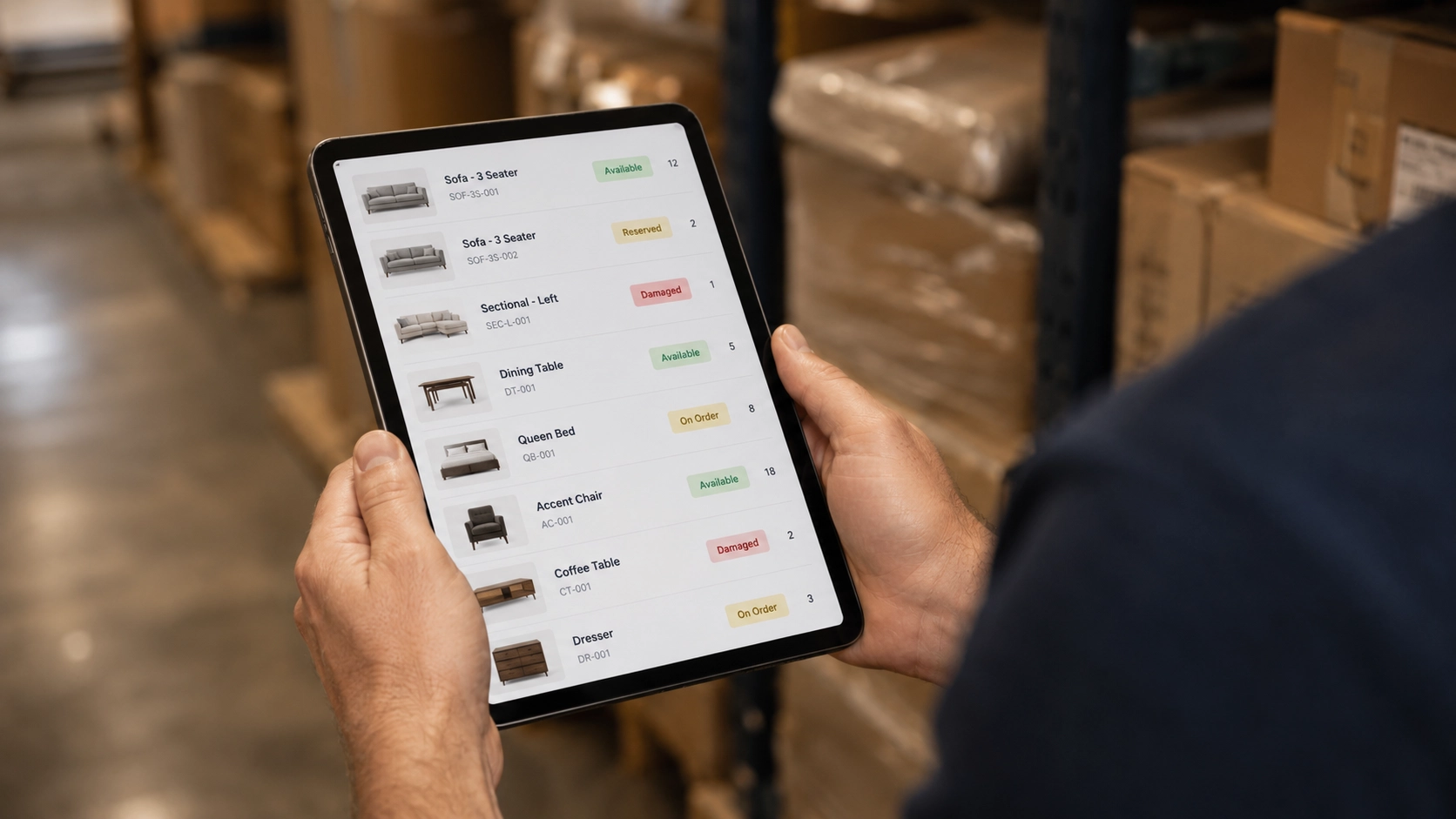
Every single one of those statuses requires a different response from your salesperson. And if your software can't tell the difference between them, your team is guessing. Your website is showing availability that isn't real. And your customers are driving across town for a sofa that technically exists in your system but isn't actually available to take home.
That's exactly what happened to us at that mattress store. The system said they had a pillow in stock. It didn't say whether that pillow was available. Those are two very different things.
What Thirty Minutes to Answer One Question Actually Costs You
Here's what running on disconnected tools looks like in practice.
An owner wants to know one thing: how many of a particular item do I actually have available right now? Sounds simple. In a store on generic software, here's what happens. They check the inventory tool. Says ten in stock. Then they check a spreadsheet to see how many are reserved for customers. Then they check another spreadsheet to see how many are scheduled for delivery this week. Then they check another to see if any are damaged or on hold. Then they do the math themselves.
Ten in stock, minus three reserved, minus two out for delivery, minus one damaged, equals four available.
That math just took thirty minutes. And it has to happen every time someone asks the question.

When your software can't hold all those statuses in one place, you don't just waste time. You make mistakes. You sell something that's already spoken for. You promise a delivery date you can't meet. You put your best salespeople in the position of telling a customer something that turns out not to be true, which is the one thing in retail you can never fully recover from.
The software sitting at the center of your operation should be removing that friction. Not creating it. Furniture retail is already a hard business. Long lead times, vendor complexity, high ticket sizes, commissioned salespeople, delivery logistics. If your technology is making all of that harder to manage instead of easier, that's not a people problem and it's not a process problem. It's a tool problem.
If You've Been Burned Before, I Get It
Most retailers who call us aren't first-timers. They've been through at least one software switch that didn't go the way the vendor promised. They've sat through demos that looked great and implementations that fell apart. They've had their team revolt. They've had data not transfer correctly. They've signed contracts with companies that were great at selling and terrible at supporting.
I'm not going to tell you those experiences weren't real. They were.
Here's what I will tell you: Jill and I were in that exact seat before we built EZ Process Pro. We bought one platform, couldn't get it to work for our store. Jill flew out with her dad for training. They still couldn't figure it out, so we paid a significant amount of money to fly their trainer to Houston to work with us directly. Still didn't work. We bought another system after that. Too many loopholes, not enough controls. We were like goldilocks and the three bears, nothing we bought seemed the right fit.

We weren't bad operators. The software just wasn't built for the way a real furniture store actually runs.
That's why we built our own. And it's why, twenty five years later, I can sit across from a retailer who's been burned twice and tell them honestly that I understand exactly what they went through because I lived it myself.
Here's the other thing I'll tell them: staying on the wrong tool because switching is scary is not a safe decision. It feels safe. But every month you spend on software that can't track inventory statuses properly, that forces your team to use spreadsheets to answer basic questions, that shows your website customers availability that isn't accurate — that's costing you. In time, in errors, in customer trust, and in your own freedom to step away from the store without worrying what's falling apart while you're gone.
What to Actually Look For When Evaluating Retail Furniture Software
If you're comparing options right now, here's a practical framework before you sign anything.
First, make sure you can afford it. There are enterprise furniture platforms that cost more per month than most independent retailers make in profit. Know your number before you fall in love with a demo.
Second, find out whether the software will adapt to how you do business or whether they'll tell you to change your business to fit their software. When Jill and I were shopping for tools twenty five years ago, almost every vendor told us we were doing things wrong. We needed to track layaways differently. Run commissions differently. Handle special orders differently. If a vendor can't explain how their system handles the specific way your store operates, that's a red flag.

Third, ask whether the platform will add new problems on top of the ones you're already solving. Will your servers go down? Do you need to hire someone just to manage the technology infrastructure? Does one update across your POS, website, price tags, and accounting actually push everywhere at once, or are you still reconciling three systems manually?
Fourth, and most importantly: ask whether the people selling it to you have ever actually run a furniture store. Not managed one. Not consulted for one. Run one. There is a meaningful difference between a company that understands your business from the outside and one that built their software from the inside.
The Cage
I'll leave you with this.
A lot of furniture store owners I talk to know their current software isn't working. They know it. They feel it every day. But they don't make a move because the fear of changing is bigger than the pain of staying.
I understand that completely. What you have right now feels safe. It's familiar. You know its problems and you've built workarounds. Opening the door to something new feels like stepping into the unknown.
But here's the truth: that familiar situation isn't just safe. It's also a cage. It's keeping you exactly where you are. It's keeping you in the store when you should be able to leave. It's keeping your team dependent on spreadsheets when they should have answers at their fingertips. It's keeping your customers from having a buying experience that makes them want to come back.

The right retail furniture software doesn't add complexity to an already complex business. It removes it. It gives you one source of truth. It makes your team more capable without requiring more of your time. It lets you see everything happening in your store from your phone without calling anyone.
That's not a fantasy. That's what the right tool actually does.
The question is whether the one you're on right now is doing that for you.